Recently in Green Leap Category

concretesun.gif

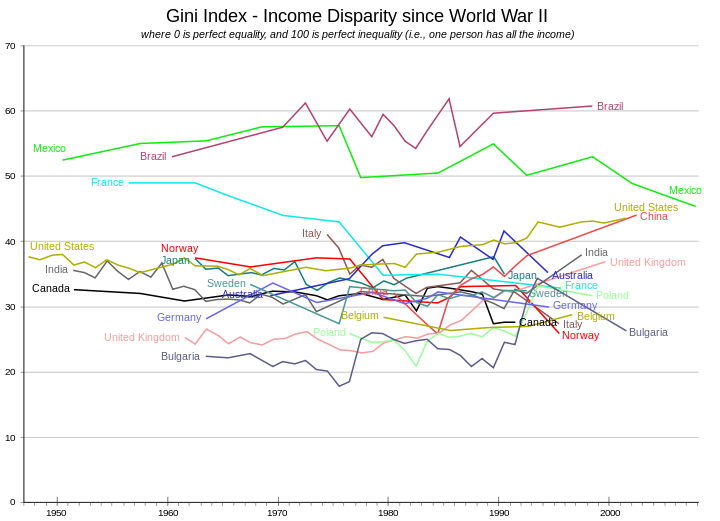
We accept it almost without question—prognostications about the future which begin with the phrae: “if present trends continue…”  Extrapolating present trends into the future has become a stock technique for both those on the political left (e.g. “if present trends continue, the gap between rich and poor will continue to widen”) and on the right (e.g. if present trends continue, GDP will double again within the decade”).

Consider the following trend:  China consumed more energy in the past ten years than it did in its entire history, spanning thousands of years.  The vast majority of this energy was in the form of fossil fuels.  If this trend in energy consumption continues, then by 2020, China would consume virtually all of the oil currently produced for export in the world today.  And, by 2030, China’s oil consumption would exceed today’s total global production of petroleum.  What is the likelihood that this trend continues? 

Even if we set aside the obvious implications of this trend for climate change and assume that the world embarks on the all-out development of unconventional oil reserves (in the form of shale oil and tight oil), to compensate for the now declining world production of conventional oil, it is not clear that production could be ramped up at a sufficient pace to meet this exponentially rising demand.

It is important to note that similar projections of current trends into the future are commonplace in virtually every domain, including the production of food, consumption of water, and emission of greenhouse gases into the atmosphere.  The reality, however, is this:  it is highly unlikely that any of the current trends in the world can or will continue into the future for very long.

Nor should we expect them to.  History is filled with game-changing discoveries and events that fundamentally alter the trajectory of society and civilization.  Consider for a moment how future projections for energy and food production appeared in the 1890s, just prior to the explosive growth of the oil industry, automobile industry, and the rise of mechanized agriculture.  No one could have anticipated how radically the world would change in a relatively short period of time.

So expect a very bumpy and exciting ride over the next decade or two.  Nothing will stay the same.  We are approaching a time of unprecedented turbulence, change…and opportunity. 

Schumpetarian creative destruction will reign supreme.
  Many incumbents will fall, and entirely new industries will be born.  An age of entrepreneurship on a scale that we cannot yet imagine is about to be unleased.

There is only one trend that we can really count on:  Present trends will not continue.


Strategies for sustainability are often counter-intuitive: No is really yes, up is really down. This is true for companies and countries alike. Over the past five years, for example, I have been working extensively in both China and India. The contrasts could not be more stark:

China: Five year plans, massive investment, rapid industrialization, infrastructure development, new town planning, national highway system, high-speed rail, new airports.

indiamap.jpg
India: Messy democracy, corruption, mass migration to cities, chaotic slums and shantytowns, poor infrastructure, inadequate roads, antiquated rail system.

Many point to China as the model, with its gleaming skyscrapers, maglev trains, freshly paved highways, and massive new towns. But will they regret it in a decade when the full impact of Peak Oil hits? Will many of these investments, so dependent on increasing consumption of fossil fuels, become like giant albatrosses?

It hit me on my most recent trip to India, where I am involved in founding a new Indian Institute for Sustainable Enterprise in Bangalore, that India's apparent ineptitude may turn out to be its "silver lining." With 600,000 villages, 700 million plus rural farmers, burgeoning slums, inadequate infrastructure, and a culture of transparency and entrepreneurship, India still has a chance to steer the country in a different direction.

India can draw upon all of its ancient knowledge and traditions while at the same time applying the best of the emerging clean and sustainable technologies to "leapfrog" to what comes next:

  • new urbanism
  • mass transit
  • sustainable agriculture
  • distributed generation
  • renewable energy
  • bottom-up entrepreneurship
  • IT-enabled development
  • inclusive wealth creation
India can take a "green leap" into future precisely because it has not used up all its seed corn on the "Old Way."

As we all know, the transformation to sustainability is the biggest business challenge--and opportunity--in the history of capitalism.
Since the dawn of the Industrial Revolution, economies of scale have ruled the day, with massive investments in power plants, pipelines, factories, transmission lines, dams, and highways to more efficiently serve the burgeoning consumption needs of the rising consumer classes. Industrial-era technologies (such as electricity, petrochemicals, and automobiles) were also closely associated with mass production, the assembly line, and centralized, bureaucratic organization, resulting in the rise of organized labor, worker alienation, and growing social stratification.

As we enter the second decade of the new century, however, the "dark satanic mills" of the Industrial Revolution are giving way to a new generation of technologies that promise to change dramatically the societal, economic, and environmental landscape. The information economy powered by the microchip has already begun to revolutionize society by democratizing access to information and empowering the repressed. Indeed, You-Tube, Twitter, and the rapid emergence of the "blogosphere" have spawned a bottom-up revolution in user-generated content.

cleanwater.jpg

Increasingly, the technologies of tomorrow will be decentralized, distributed in character and disruptive to incumbent firms and institutions. It is much cheaper and more energy efficient, for example, to treat drinking water at the point of use, rather than transporting massive quantities of clean water through pipes from treatment plants only to have much of it leak out or be re-contaminated before it reaches its final destination.

Indeed, we are witnessing a dramatic reversal of the logic of scale--the new diseconomies of scale.

Think about it: Over the past decade or so, we have witnessed the rise of: distributed generation of energy, point of use water treatment, community supported agriculture, microbreweries, point of care healthcare, microfinance, and sustainable construction, to name just a few. Indeed, the term "nano" has become de rigeur.

Because existing players in the utility, energy, transport, food, water, and material sectors have so much to lose, however, it is enormously difficult for the entrepreneurs developing such distributed solutions to gain traction in established markets. Yet given their small scale and distributed nature, such clean technologies hold the potential to creatively destroy existing hierarchies, bypass corrupt governments and regimes, and usher in an entirely new age of capitalism that brings widely distributed benefits to the entire human community.

And rather than depending on national governments or paternalistic social engineers to design the future for the aspiring masses, these disruptive new technologies may be best brought forward through the power of capitalism--not the capitalism of the Industrial Revolution, which enriched a few at the expense of many, but rather a new, more dynamic form of global capitalism that will uproot established elites and unseat incumbents by creating opportunity at the base of the economic pyramid on a previously unimagined scale.

newcomen.gifWhen Thomas Newcomen pumped water out of an English Coal Mine with a makeshift steam engine for the first time in 1722, little did he know that he was giving birth to the defining characteristic of industrial capitalism for the next two centuries--the relentless quest for greater labor productivity.  By substituting coal for manpower, the English textile industry drove the industrial revolution and established the template--and "rules of the game"-- for all industrial enterprises to come.  From cars to chemicals to computer chips, the very concept of "productivity" came to mean producing more product with fewer person-hours of work.

This metric made sense in the 19th century, when coal (and other raw materials) were plentiful and people were relatively scarce.  Now, however, exactly the reverse logic applies--fossil fuels and other raw materials are increasingly scarce and people are relatively plentiful.  We now live with the paradox that increasing business productivity means fewer jobs (especially when economic growth slows), precisely at the time that we need productive employment the most.

Occupy Wall Street, the Arab Spring, the corruption crisis in India, the rural revolt in China--all of these growing social protest movements originate from the same source--a growing "opportunity crisis" driven by unemployment, underemployment, alienation, and humiliation.  The time has come, therefore, to overthrow the tyranny of labor productivity and graduate to a new definition for what it means to be "productive" in business.

wepeople.jpgIn the emerging economies of the world, this revolution has already begun.  ITC in India, for example, prides itself on creating livelihoods for the poor in the rural areas as part of its strategy for wasteland reforestation and agricultural productivity improvement.  Indeed, as commodity costs rise, it may make sense to redefine productivity--from capital intensity and labor efficiency to labor intensity and capital efficiency.  In the 21st century, "sustainable" enterprise must define success by the extent to which they create productive and fulfilling employment for the people of the world. 

Is business up the challenge?

How does business move beyond greening? TOP - “Create needs in existing markets” vs BOP - “Create markets from existing needs.”

The financial crisis has produced a growing disgust with companies and financial institutions motivated only by greed and short term profits.  Talk of sustainability is in the air and everywhere there are references to a "new" capitalism--a more inclusive, green, stakeholder-focus approach to business. Clean technology venturing is de rigeur.  Social investing has also burst on to the scene, with the promise of capital for those businesses dedicated to the cause of poverty alleviation and social inclusion. 

donut.jpgAs someone who has been working in this space for better than twenty years, this is indeed exciting to finally see.  But wait a minute.  Houston, we have a problem:  Despite all the hand-waving and rhetoric, we are still not at the tipping point.  Why?  Because for many entrepreneurs dedicated to incubating new sustainable technologies and business models serving the base of the pyramid, there is still a dearth of investment capital.  In short, there is a "doughnut hole" in the field of sustainable finance.

On one side of the hole in the doughnut, there is the emerging domain of Impact Investing.  This new space is made up of a hodge-podge of social investors, micro-financiers, and community reinvestment specialists. What they tend to have in common is a focus on "doing well by doing good."  Think Acumen Fund, E + Co, and IGNIA.  Not that this is a bad thing.  On the contrary, it is an exceedingly important development. But the central tendency for the Impact Investor is to place social impact over financial return. 

Many impact investors are focused on providing finance to the "social entrepreneur"--the bootstrapping player from the developing world who is looking to grow a local enterprise, creating new opportunities for livelihoods and service to the underserved. Think Grassroots Business Fund, Ashoka, Root Capital and New VenturesMost expect, as a matter of course, a longer payback and below-market returns.

Others, like Muhammad Yunus, have advocated a form of enterprise called "social business" where investors simply get their money back, with no capital gain at all.  Few, if any, in the impact investing space are interested in investing in "Western" (or Northern) technologists or entrepreneurs seeking market returns from new, clean technologies or business models in the developing world.

On the other side of the hole in the doughnut, there is the emerging Clean Tech Venturing space.  Billions of dollars have flowed into these emerging technologies over the past decade.  Think Kleiner Perkins, Technology Partners, and Clean Edge.  Most investors in this new space are venture capitalists seeking market returns from deals that follow the same rules as conventional VC investments, such as Big Wind projects, battery technology, and large scale solar applications.  Most want to see contracts with large OEMs, or at least $1 million in revenue, prior to investing and want to cash out within 3-5 years.  Few in this space are interested in the developing world as a potential early market since it probably takes longer to develop, delaying the ultimate "liquidity event." 

And now for the doughnut hole:  For Western (or Northern) entrepreneurs focused on incubating next-generation clean technologies, starting in the developing world at the base of the income pyramid, there is still a dearth of capital. You are caught between a rock and a hard place.  I know, because I have some first-hand experience with this.  For the past four years, I've been involved with a start-up company, The Water Initiative (TWI).  TWI is focused on creating commercially viable, household scale (point-of-use) solutions to drinking water challenges in the developing world, starting in Mexico. 

We had little problem securing first round financing from Angels to launch the business development process in Mexico starting 2008.  After two years of hard work in co-creating a viable business concept, along with extensive new technology development in point-of-use water treatment, we were ready to begin scaling the business in 2010.  However, the doughnut hole prevented us from securing critical second round financing until well into 2011.

Founder Kevin McGovern pitched our case to dozens of Impact Investors and Venture Capitalists in the 2009-2011 time frame.  The story that emerged was clear:  We did not fit the "social investing" pattern for Impact Investors nor did we fit the time frame or payout expectations for the traditional VCs.  We fell between the cracks.  In the end, we secured second round financing from an off-shore financier.

greenfuzz.jpgSo despite the recent upsurge in attention to "social," "impact," and "clean tech" investing, there is still a structural gap--a doughnut hole-- in sustainable finance. But this also means that there is a huge opportunity for visionary financiers to invent the new investment categories and asset classes needed to fill this gap.  There is also an opportunity for corporate leaders to "plant the flag" by investing in the technologies and business models of tomorrow.

So far, emerging market financiers and corporations (e.g. the Indians and Chinese) seem more inclined to innovate the financing mechanisms needed to fund the sustainable enterprises of tomorrow--those that take a bit longer to incubate, but have the potential to transform the world and produce incalculable growth and profits in the long run.

The question is:  Will the US, Western Europe, and Japan cede this emerging space to financiers and corporate leaders from the emerging economies thereby missing out on the opportunity of the century:  the chance to participate in the creation of a truly sustainable future?
cleantechbulb.jpgWe often hear that the reason the so-called clean technology revolution has so far only amounted to a genteel protest is because new clean technologies are simply too expensive

Only rich Germans and Californians can afford such luxuries.

We must wait, so the story goes, for major "breakthroughs" to occur in renewable energy, biofuels, biomaterials, potable water, etc., before they can be cost competitive with conventional technologies and infrastructures.  To convince us of this point, we are given graphs showing costs declining and volumes increasing for these emerging clean technologies, but the take-off point is always about a decade away. 

Unfortunately, I can still remember seeing such graphs back in the late 1970s! 

Well, I'm here to tell you that this story is really a fantasy.  It provides a convenient excuse for not moving more aggressively on the clean technology front.  The truth is that we are drowning in perfectly good clean technologies. What is lacking is not breakthrough technology but rather breakthroughs in how we bring these technologies to market. 

Many corporations and universities today possess substantial stocks of unused (or at least uncommercialized) green technology literally "sitting on the shelf."  Frequently, these technologies are disruptive to current core businesses or at least do not fit easily into existing business models.

GE, for example, has dozens of small, distributed solar and water technologies on the shelf, in part because the company's core business for the last half-century has been focused on large-scale infrastructural technologies (such as power plants) sold to governments or other large players.  Even today, the company's "Ecomagination" initiative focuses on large-scale applications like Big Wind rather than small, distributed, point-of-use technologies which are outside of their commercial comfort zone.

The Cornell University Seal

My own institution, Cornell University, provides another vivid example.  A few years back, my colleague Mark Milstein and I ran a little experiment.  We wondered if some of the literally hundreds of technologies and intellectual properties just sitting on the shelf at the University might be commercially viable if viewed through a different lens.

Most Universities seek primarily to license the intellectual property produced by their faculty to existing corporations.  A few try to encourage faculty to participate in the formation of new ventures, but most of these focus on the existing, served market in the developed world.  My colleague Mark and I wondered, "what if we looked at some of these technologies through the lens of new enterprise creation focused on the vast underserved space at the base of the income pyramid?"

We structured a course around this question and selected a sample of shelf technologies that seemed to have the characteristics we were interested in (i.e. renewable, bio-based, small-scale, distributed applications).  We assigned student teams to look at these technologies from this perspective.  Sure enough, when viewed through the emerging lens of "disruptive" or "reverse" innovation, the majority of these technologies appeared to have real commercial potential.  To be appropriate, however, these green technologies need to be optimized in new and unexpected ways, based on experience on the ground in actual underserved communities. The technology and the business model must co-evolve as the process of commercialization unfolds.  This requires a new capability in business co-creation, which I have discussed elsewhere (see my blog on "Writing the Unfinished Symphony").

For aspiring Clean Tech entrepreneurs, therefore, expensive R&D and new invention are probably unnecessary; instead, the first step is to take a careful stock of  what relevant clean technologies already exist on the shelf--either in existing large corporations, or at Universities. Many large corporations are "donating" these patents to Universities because they do not know what to do with them.  So many perfectly good new clean technologies are available for a "song."

By gaining low-cost access to these technologies, it may be possible to engage in a form of modern-day green "alchemy."  Indeed, there is a rare opportunity here to turn "lead" into "gold" by repurposing the thousands of clean "shelf" technologies extant in the World to first serve the needs of the underserved at the base of the pyramid.  This unexploited opportunity will not last forever, however, since nature abhors a vacuum!  It is clearly time to take the "Green Leap" to the base of the pyramid.  For it is there that the Clean Tech Revolution will begin.
Oil painting of Franz Schubert, after an 1825 ...

Image via Wikipedia

When Franz Schubert wrote the first two movements of Symphony No. 8 in B Minor in 1822 (what would come to be known as the "Unfinished Symphony"), little did he know that he was modeling the behavior and skills needed to successfully create the markets of the future at the base of the world income pyramid in the 21st century.

In fact, a full decade after C.K. Prahalad and I first wrote the Fortune at the Bottom of the Pyramid (BoP), few large corporations have yet to realize the vast business potential of the world's four billion poor and underserved:  Most have either sought simply to sell stripped-down versions of their current products to the emerging middle classes in the developing world, or have abandoned the profit motive entirely and moved their BoP initiatives to the corporate social responsibility department or corporate foundation. 

Indeed, it is telling that, as we enter the second decade of the 21st century, the only real BoP business success stories come from the developing world itself--microfinance and mobile telephony for the poor.  Billion dollar companies like Grameen Bank and Grameen Phone in Bangladesh, Compartamos in Mexico, and CelTel in Africa still stand out as the few iconic examples of business success cited by BoP analysts and advocates from around the world.  In fact, no global conference on the topic is complete without significant reference to at least one of these "home run" examples.

This raises the question:  Is there something about microfinance and mobile telephony that has enabled such stunning success?  The answer is yes!  When you examine each of these industries closely, it quickly becomes apparent that each is really a means to an end, rather than an end in itself.  Indeed, microfinance and mobile telephony are not end products, but rather are enabling platforms that facilitate people to accomplish any number of tasks and deliver a wide range of functionalities.  They are, in short, the equivalent of "unfinished symphonies."

Microfinanciers and rural wireless service providers enable poor slum dwellers and villagers to figure out for themselves how best to weave these new services into their lives.  For these customers, this may mean mobile transfer of funds, communicating in code with a loved one, acquiring a third cow, accurate information on crop prices, or expanding a current micro-enterprise.  My colleague Erik Simanis calls these types of products and services value open since they enable people to complete the value proposition for themselves.

Unfortunately, most multinational corporations have chosen BoP strategies that effectively deliver finished symphonies with defined value propositions in the mistaken (though well-intentioned) belief that they know better than the poor themselves what their real needs are.  What works in the established markets at the top of the income pyramid, however, does not work so well in the emerging BoP space.

Time-tested marketing research methods (e.g. consumer surveys, focus groups, ethnographic studies) are excellent ways to uncover new opportunities in already established markets, where low cost or differentiation strategies rule and customers are already accustomed to paying money for service.  However, when it comes to serving the BoP, the challenge is not one of uncovering latent demand, but rather one of creating entirely new markets and industries, where only informality, self-provisioning or barter previously ruled. 

To effectively realize the vast business potential at the base of the pyramid, corporations must thus show a bit of humility.  Companies must come to view the poor more as partners and colleagues rather than merely clients or consumers.  Such an approach calls for deep dialogue (two-way communication) rather than just deep listening.  To realize this mindset shift requires the development of a new "native capability" which focuses on co-creating business concepts and business models with the poor, rather than simply marketing inexpensive versions of top-of-the-pyramid products to low income consumers.

The logic of co-creation does not, however, mean simply entering underserved communities with a completely open mind and no sense of business purpose or direction.  On the contrary, companies must clearly communicate what resources they bring to the table in the form of skills, capabilities, and technological potential; they must do so, however, without prematurely imposing a final product or technological solution.  The aim then is to marry corporate global best practices and technologies from the company with the local knowledge, skills, and aspirations of the local community--to complete the "unfinished symphony" together.

Done well, such an approach to BoP business development holds the potential to create entirely new product and service categories that are embedded in the actual context (rather than simply cheaper versions of existing products from the top of the pyramid).  Embedding also means creating "community pull" for BoP innovations, since they have been co-created with community members, rather than engaging in the expensive and time-consuming process of "social marketing" to educate and promote behavior change among the poor.

Over the past seven years, my colleagues and I have been focused on developing such an approach for companies to effectively co-create new markets in the BoP.  The approach is called the BoP Protocol.  We have now experimented with this approach in a half-dozen different business contexts in Asia, Africa, and Latin America, and have learned a great deal about how to engage local partners and communities in the dance of co-creation.

Many others have also embarked on similar learning journeys to unravel the keys to successfully creating the inclusive businesses of tomorrow that embrace all of humanity and end the scourge of poverty.  My colleague Ted London and I have gathered some of the most important emerging contributions in this regard in a new book, Next Generation Business Strategies for the Base of the Pyramid.

Our conclusion:  There is no "fortune at the bottom of the pyramid" waiting to be discovered.  Instead, the challenge for companies is to learn how to create a fortune with the base of the pyramid.  Franz Schubert's Unfinished Symphony in the 19th century may thus hold the key to a more inclusive form of capitalism for the 21st century.

While the current economic crisis has been devastating to many in the US and beyond, it could actually turn out to be a blessing in disguise.  In a very real sense, the world--and global capitalism-- now stand at a crossroads. New York Times columnist Tom Friedman recently observed that we had perhaps reached the global "inflection point"-- that the growth model we created over the last 50 years is simply unsustainable economically and ecologically and 2008 is when it finally imploded.

Australian sustainability commentator Paul Gilding even had a name for this: "The Great Disruption"--when both Mother Nature and Father Greed hit the wall at the same time.  I believe that the significance of the transformation we are experiencing cannot be overstated; companies and other institutions ill-prepared for this new world will simply not survive.  The time has come for innovation on a scale that we have never seen before.

It's the natural instinct of governments to pump resources into the economy during such times, but the bailouts and the stimulus packages are in some ways futile efforts to try to restore the world to the way it was. The truth is, we can't. We're witnessing the death of the "Chimerica" consumerist model, where Americans borrow money so they can buy more goods so the Chinese can build more coal-fired plants to make more goods. That model imploded, and I don't think it can come back.

What we're now experiencing is a transformation to a more sustainable form of capitalism--and ultimately, a more sustainable world. This transformation began in the 1990's with the "eco-efficiency" revolution when, for the first time, it became clear that reducing waste, emissions, and pollution can actually save money and lower risk.

In the past decade, two exciting new commercial developments have burst onto the global scene. One revolves around the commercialization of new green technology; the other around better serving and including the poor at the base of the income pyramid. Both are exciting, but the problem is that they have evolved as separate communities. The green techies say, "Just give us the venture capital, and we'll invent the clean tech of tomorrow," as if it will then spring magically into reality.

Proponents of the base of the pyramid approach seek to address poverty and inequity in developing countries through a new form of enterprise. They say, "How do we innovate business models, extend distribution, and become embedded in the community to build viable businesses from the ground up?" But such "pro-poor" business advocates often lose sight of the environment, as if all this new economic activity will automatically create a sustainable form of development at the base of the pyramid. Tragically, that way of thinking could take us all over the cliff, if we end up with 6.7 billion people consuming like Americans.

The challenge of our time, therefore, is to figure out how to bring these two worlds together to enable a global "Green Leap."  Indeed, emerging clean technologies, including distributed generation of renewable energy, biofuels, point-of-use water purification, biomaterials, wireless information technology, and sustainable agriculture hold the keys to solving many of the world's global environmental and social challenges. 

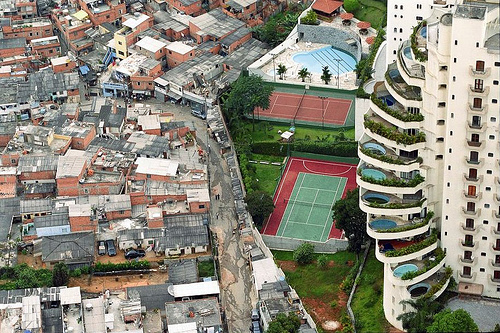
Because these small-scale green technologies are often "disruptive" in character, the base of the pyramid is an ideal place to focus initial commercialization attention.  China's towns and small cities, Brazil's favelas, and India's rural villages present such opportunities.  Once established, such technologies can then "trickle up" to the established markets at the top of the pyramid--but not until they have become proven, reliable, affordable, and competitive against the incumbent infrastructure. 

In my view, the Green Leap is a key point of leverage in transforming the global economy toward sustainability.  If I am right, this holds important implications for policy-making.  Rather than circling the wagons and seeking to build a Green Fortress America (or Europe, or Japan), the best thing we could do is get our most promising technologists and entrepreneurs out of the US (and the rest of the developed world markets) and into the rural villages, urban slums, and shantytowns of the world where 4 billion plus people currently reside.  It is here that the Green Leap will take place.  And, it is here that the corporations of the 21st century will be born.

I’m Stuart L. Hart, a leading authority on the implications of environment and poverty for business strategy. This blog will be a place for me to update you on some of my newest insights - based on the work I’m doing to help businesses take the Green Leap.

Join the discussion!

A few years ago, I defined the concept of sustainable value; my work includes over 70 academic papers and several books.

Capitalism at the CrossRoads

Capitalism at the Crossroads, published in 2005, was selected by Cambridge University as one of the 50 top books on sustainability of all-time; the third edition of the book was published in 2010. I present new strategies for identifying sustainable products, technologies, and business models that will drive urgently needed growth and help solve social and environmental problems at the same time. I also argue that corporations are the only entities in the world today with the technology, resources, capacity, and global reach required.

Beyond Greening: Strategies for a Sustainable World won the 1997 McKinsey Award for Best Article in Harvard Business Review and helped launch the movement for corporate sustainability. 

fortune at the bottom of the pyramid

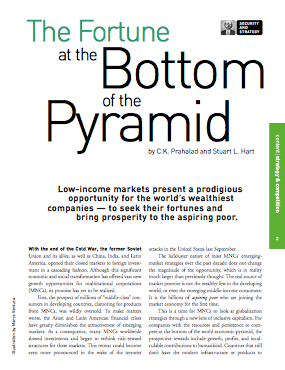
With C.K. Prahalad, I wrote the path-breaking article: The Fortune at the Bottom of the Pyramid which provided the first articulation of how business could profitably serve the needs of the four billion poor in the developing world.

Learn more about my work at stuartlhart.com >>

About this Archive

This page is an archive of recent entries in the Green Leap category.

Green Leadership is the previous category.

Innovation is the next category.

Find recent content on the main index or look in the archives to find all content.